
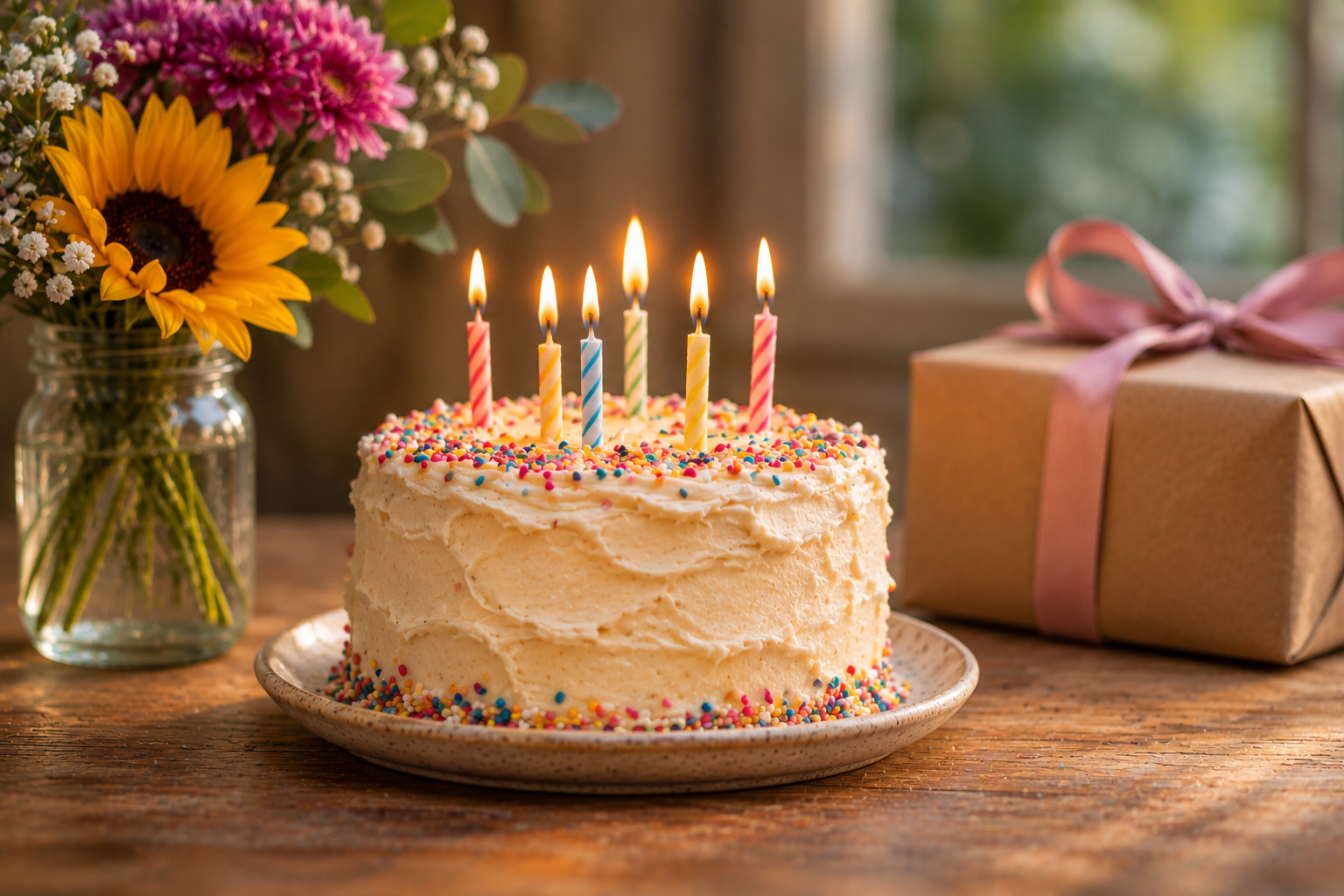
When you hear the word “birthday,” you probably think of cake, candles, gifts, and people singing to you while you try to figure out what to do with your face.
But something I’ve noticed in my work as a therapist, and experienced with my own birthday, is just how much can be riding on that one day.
For some people, birthdays have consistently been occasions when they felt remembered and celebrated. They could count on feeling special, so they may never have had much reason to question it.
For others, a birthday comes with a much deeper question:
Am I someone worth celebrating?
When that’s the question you’re carrying, a disappointing birthday can feel like an answer.
That’s a lot of responsibility for a day with cake.
A birthday gives us a specific occasion to hope that someone will think about us, remember what we like, make room for us, and show us that our presence in their life means something.
If you already worry that you’re forgettable, unimportant, or asking too much, the day can feel especially high-stakes. Someone forgetting your birthday or putting in little effort can seem to confirm the very thing you were afraid of.
Meanwhile, someone whose birthdays have generally been filled with love and celebration might wonder why you're so upset. To them, it may be one disappointing day. To you, it may feel painfully familiar.
As a therapist who also happens to have a birthday right after the holidays, I know something about that familiarity.
Growing up, by the time my birthday arrived, the festive part of the season was over. The crowds were gone, and everyone was finished celebrating, planning, and spending money.
And then, hello. Me again. One more celebration, please.
My family owned a restaurant in the mall, so the holidays meant long hours and a lot of work. By January 7th, everyone was completely worn out.
My parents tried. That matters to this story, especially because I couldn't always recognize or fully appreciate their efforts at the time. I wanted to feel special, and when the day fell short of what I had hoped for, I felt forgotten.
Over time, I began anticipating that disappointment. Resentment would build before my birthday even arrived. I would tell myself to have no expectations, as though wanting nothing was something I could simply decide to do.
A part of me was already disappointed before the day even began.
That part was preparing for the familiar hurt before anyone had a chance to do anything. I could begin the day already watching for signs that I didn't matter, making it harder to notice the ways people were actually trying to show me that I did.
That's one reason I believe birthdays deserve more attention than we sometimes give them. We might notice someone withdrawing, becoming irritable, or insisting they don't want to do anything for their birthday. Yet underneath those reactions, there may be someone who deeply wants to feel celebrated but is afraid to hope for it again.
For me, healing involved getting to know that disappointed part of myself rather than criticizing myself for caring so much.
It also involved helping that part see beyond January 7th.
The message I sometimes took from my birthday—I don't matter—didn't accurately reflect my entire relationship with my family. There were countless other moments when I felt loved, remembered, and considered. My parents' efforts, both on my birthday and throughout the year, deserved a place in that story, too.
As I became more able to recognize and appreciate that care, the resentment began to ease. I could understand my parents' exhaustion while still having compassion for the younger version of myself who wished the day had felt different.
Gradually, my birthday no longer had to serve as proof of whether or not I mattered.
That broader perspective helped me make sense of my own experience. For someone else, however, looking back may reveal that their birthday disappointments were part of a larger pattern of feeling overlooked or unimportant. There needs to be room to acknowledge that experience, too.
The goal isn't to dismiss the hurt or convince yourself that birthdays shouldn't matter. Rather, it's to understand what the day has come to represent for you and whether you're approaching it already expecting an old wound to be reopened.
You might begin by asking yourself:
What am I hoping this birthday will show me?
What am I afraid it will confirm?
Those questions can reveal far more than simply telling yourself you're too old to care.
In parts work, we seek to approach the part of ourselves that anticipates disappointment with curiosity and compassion rather than judgment. That part may need us to acknowledge just how lonely or painful those earlier birthdays felt. It may also need help recognizing what's different now, what love and care are available, and what choices we have today that we may not have had in the past.
Perhaps you can tell someone what would feel meaningful to you. You can allow yourself to want a thoughtful plan, a meaningful gesture, or even a little fuss. You can also take your own wishes seriously enough to make room for them.
And if you don't have someone in your life who will celebrate with you, that absence can genuinely hurt. But you still deserve a day that includes something meaningful or enjoyable. Your own attention, kindness, and care deserve a place in the celebration, too.
Today, I no longer carry the resentment I once felt about my birthday. I can recognize my parents' efforts more clearly, remember the love that existed throughout the year, and consider what I want my birthday to look and feel like now.
I still believe birthdays matter.
After all, wanting someone to be glad you exist is a deeply human desire, regardless of your age.
And there's something particularly meaningful about learning to include yourself in that celebration.
You can still hope that others will make your day special while remembering that you're also allowed to celebrate yourself.
Because the truth is, there will never be another you.
And I think that's worth celebrating, don't you?
Written By: Jessica Sahoury, MA, LMFTA