
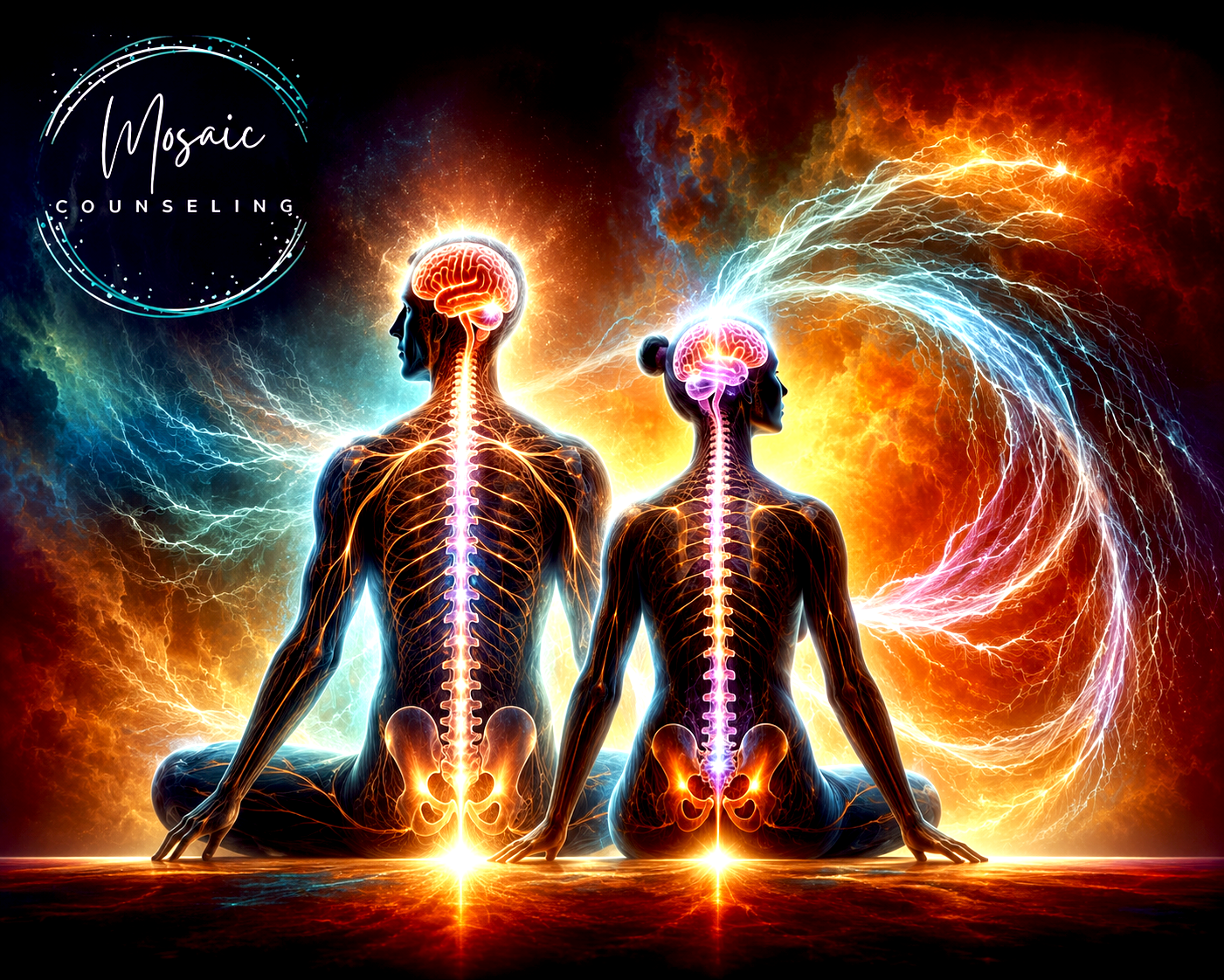
Chronic pain is rarely just physical. It exists at the intersection of body, mind, and lived experience, touching mood, identity, relationships, and even hope for the future. Conditions such as Fibromyalgia, Carpal Tunnel Syndrome, Degenerative Disc Disease, and various autoimmune disorders often illustrate this complex interplay.
Pain can influence depression, anxiety, irritability, and even how we see ourselves. It can lead to ruminating thoughts, self-criticism, feelings of defeat, and disconnection from others. Over time, it may begin to shape not just how we feel, but who we believe we are.
The Overlap: Pain, Mental Health, and Identity
Chronic pain is not all in your head. It is real, physiological, and often deeply disruptive. At the same time, the way we experience pain is influenced by our emotional and psychological world.
When pain persists, it often brings:
• Increased anxiety and hypervigilance
• Depressive symptoms and loss of motivation
• Strain in relationships
• Changes in self-worth and identity
The mind and body are not separate systems. They are constantly communicating. Pain signals travel through the nervous system, but meaning is created in the mind. Those meaning matters.
An Internal Family Systems Perspective: The Pain Part
Internal Family Systems offers a different way of understanding chronic pain, not as something to fight, but as something to get curious about.
Instead of viewing pain solely as a symptom, IFS invites us to consider:
What if pain is also a part of us?
A pain part may:
• Carry emotional burdens such as fear, anger, grief, or shame
• Act as a protector by slowing us down or forcing rest
• Hold unresolved experiences in the body
For many, pain can feel like an enemy, something intrusive, isolating, and uncontrollable. It may even become something we resent or fear. But IFS gently shifts this perspective:
What if this part is not trying to harm you, but is instead trying, however imperfectly, to help or communicate something?
From Fighting Pain to Relating to It
When pain is approached with resistance, it often intensifies. When approached with curiosity, something different can happen.
In an IFS framework, you might begin by:
• Noticing where the pain lives in your body
• Describing it such as tight, sharp, radiating, or tingling
• Gently asking what this part might want you to know
• Observing your emotional response to the pain such as anger, fear, or hopelessness
For example, pain that radiates from the neck through the shoulder and into the arm may be physical. It may also carry tension, burden, or long held stress. This does not mean the pain is imagined. It means the body may be holding more than just physiology.
Compassion as a Clinical Tool
This shift from resistance to relationship can be powerful.
When we begin to:
• Approach pain with compassion instead of hostility
• Separate us from the pain such as saying “I have a pain part” instead of “I am broken”
• Stay curious instead of shutting down
We create space for healing, not just physically, but emotionally.
This does not mean the pain disappears. But it may:
• Feel less overwhelming
• Become more understandable
• Lose some of its control over our identity and daily functioning
Reframing the Experience of Chronic Pain
Chronic pain can feel isolating, like something that sets you apart from others. It can feel like a lifelong burden, something relentless and unfair.
And yet, through an IFS lens, there is another possibility:
Pain may not only be something to endure, but something to understand.
When we get to know our pain, we may discover it holds more than suffering. It may also hold meaning, protection, and pathways toward healing.
A Gentle Reflective Exercise
If it feels accessible, you might take a few quiet moments to explore your experience in a new way:
Begin by noticing your body.
Where do you feel pain or discomfort right now?
Without trying to change it, simply observe.
Is it sharp, dull, heavy, tight, or moving?
See if you can bring a sense of curiosity to this area.
Not fixing. Not judging. Just noticing.
Then, gently ask within:
What might this part want me to know?
You do not need to force an answer.
Sometimes the first response is simply emotion, sensation, or even silence.
If it feels right, you might also notice:
How do I feel toward this pain?
Do I feel frustrated, afraid, exhausted, or disconnected?
And then, very gently:
Is it possible to offer even a small amount of compassion toward this part?
You might imagine softening around it, or simply acknowledging:
This is hard. And I am here.
There is no right way to do this.
The goal is not to eliminate pain, but to begin shifting your relationship with it.
Even a moment of curiosity can be a meaningful step toward healing.
Final Thoughts
The mind and body are deeply connected across experiences, symptoms, and stories. Chronic pain is complex, and no single framework explains it fully.
But Internal Family Systems offers something unique:
A way to relate to pain that is grounded in curiosity, compassion, and respect for the body’s wisdom.
You are not your pain.
And your pain may not be your enemy.
It may be a part of you waiting to be understood.
Written By: Hope Sparks, MA